
Is your freezer light on, but the inside isn’t freezing like it should? That can be frustrating and confusing.
You rely on your freezer to keep your food fresh and safe, but when it stops working properly, you need answers fast. You’ll discover the common reasons why your freezer isn’t freezing, even though the light is on. By the end, you’ll know exactly what to check and how to fix the problem before it gets worse.
Keep reading to protect your food and save yourself time and money.
Common Causes
When the freezer light stays on but the freezer does not freeze, several common problems may be the cause. These issues affect the freezer’s cooling ability and need attention. Understanding these causes helps in quick troubleshooting and repair.
Faulty Thermostat
The thermostat controls the freezer temperature. If it stops working, the freezer won’t cool properly. A broken thermostat may cause the freezer to run without freezing food. Testing or replacing the thermostat can fix this issue.
Blocked Air Vents
Air vents allow cold air to circulate inside the freezer. Blocked vents stop this airflow and cause uneven cooling. Food or ice can block vents. Clearing the vents restores proper cold air flow and freezing.
Dirty Condenser Coils
Condenser coils release heat from the freezer. Dirt and dust on coils reduce their efficiency. This makes the freezer work harder but freeze less. Cleaning the coils regularly helps maintain strong cooling.
Malfunctioning Evaporator Fan
The evaporator fan moves cold air inside the freezer. If the fan fails, cold air cannot spread. The freezer light stays on but the temperature rises. Replacing a bad fan often solves this problem.
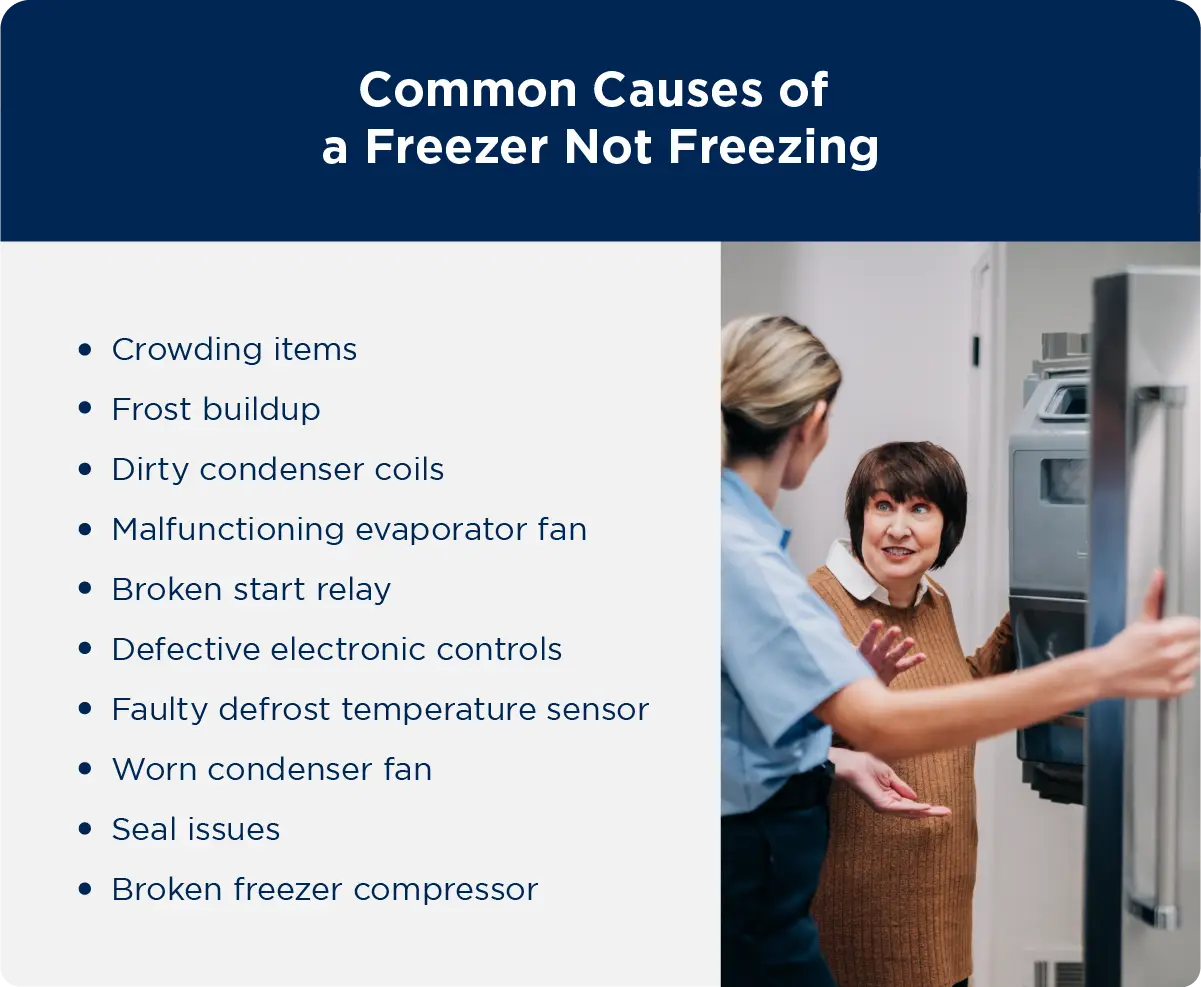
Credit: www.mrappliance.com
Checking Temperature Settings
Checking the temperature settings is a key step when the freezer light is on but the freezer is not freezing. Sometimes, the thermostat might be set too high, causing the freezer to stay cold but not freeze. It is important to know the right temperature and adjust the settings carefully. This ensures the freezer works well and keeps your food safe.
Ideal Freezer Temperature
The ideal temperature for a freezer is usually 0°F (-18°C). This temperature keeps food frozen and fresh for a long time. If the freezer temperature is above 0°F, the food may start to thaw. Setting the correct temperature helps the freezer run efficiently and saves energy.
Adjusting The Thermostat
To adjust the thermostat, first locate the control dial or digital panel inside the freezer. Turn the dial to a colder setting if the freezer is not freezing enough. Wait for several hours after adjusting before checking the temperature again. Small changes can make a big difference in freezing performance.
Inspecting The Door Seal
Inspecting the door seal is important when the freezer light is on but not freezing. The door seal keeps cold air inside the freezer. A damaged seal lets warm air in. This makes the freezer work harder and may stop it from freezing properly.
Signs Of A Damaged Seal
Look for cracks, tears, or holes on the seal. Check if the seal feels sticky or brittle. Notice if the door does not close tightly. You might see frost or water near the door edge. These signs show the seal is not working well.
How To Replace The Seal
First, buy a seal that fits your freezer model. Pull out the old seal carefully from the door groove. Clean the groove to remove dirt and old glue. Fit the new seal into the groove, pressing it firmly. Close the door and check if it seals tightly. This can help the freezer freeze properly again.

Credit: www.youtube.com
Defrost System Issues
The freezer light staying on but the freezer not freezing often points to defrost system issues. This system stops frost from building up inside the freezer. When it breaks, frost can block cold air. This stops the freezer from working right. Understanding these problems helps you fix the freezer faster.
Frost Buildup Problems
Frost buildup happens when the defrost system fails. Thick frost blocks vents and coils. Cold air cannot move through. The freezer warms up. Food may spoil faster. Frost buildup also makes the freezer work harder. This wastes energy and can cause damage over time.
Testing The Defrost Timer And Heater
The defrost timer controls when the freezer melts frost. The heater warms the coils to clear frost. Both parts must work well. Use a multimeter to test the timer for power. Check the heater for continuity. No power or broken parts mean the defrost system fails. Replace any broken parts to restore freezing.
Fan And Motor Troubleshooting
When the freezer light is on but the freezer is not cold, fan and motor issues might be the cause. These parts help move cold air inside the freezer. If they stop working, the freezer cannot keep food frozen.
Checking the fans and motors is a good step in fixing the problem. Knowing how these parts work helps find the issue fast.
Evaporator Fan Function
The evaporator fan moves cold air from the freezer coils. It spreads cold air inside the freezer and fridge sections. When this fan stops, cold air does not flow well. The freezer may feel warm even if the light is on. Dust or ice can block the fan blades. The motor can also burn out after long use.
Test the evaporator fan by opening the freezer door. The fan should stop when the door is open. If it does not run with the door closed, the fan or motor needs repair.
Condenser Fan Role
The condenser fan cools the compressor and condenser coils. It helps the freezer cool efficiently by blowing air over these parts. If this fan fails, the compressor can overheat. This stops the freezer from freezing properly.
Check the condenser fan for dust and debris. Clean it carefully to keep air flowing. Listen for strange noises from the fan motor. A noisy or silent fan often means a motor problem.
Power And Electrical Checks
Power and electrical problems often cause the freezer light to stay on while the freezer does not freeze. Checking the power and electrical components is a good first step. These simple checks can help find if the freezer is getting the right electricity to work.
Inspecting Power Supply
Start by checking the power supply to the freezer. Make sure the plug is fully inserted into the socket. Look for any visible damage to the power cord. A loose or damaged cord can stop the freezer from getting power. Test the outlet by plugging in another device. If the device does not work, the outlet may be faulty. Use a voltage tester for a more accurate check. Ensure the freezer gets a steady power flow.
Resetting Circuit Breakers
Locate the circuit breaker panel in your home. Check if the breaker linked to the freezer has tripped. A tripped breaker cuts off power to the freezer. Switch the breaker off, then back on to reset it. This step can restore power and help the freezer start cooling again. If the breaker trips repeatedly, call an electrician. Continuous trips can signal a bigger electrical issue.
When To Call A Professional
Your freezer light is on, but the freezer does not freeze. This problem can have many causes. Some issues are simple to fix. Others need expert help. Knowing when to call a professional saves time and money.
Small problems like a blocked vent or dirty coils can be handled alone. But complex issues need special tools and skills. Trying to fix these yourself may cause more damage.
Complex Repairs
Some freezer problems are hard to diagnose. Faulty compressors, broken fans, or refrigerant leaks need expert care. Professionals have the right tools to find and fix these issues safely. They also know how to handle refrigerants and electrical parts.
Attempting complex repairs without experience can risk injury or damage. A trained technician will repair your freezer properly. This ensures it works well and lasts longer.
Warranty Considerations
Check your freezer’s warranty before any repair. Many warranties become void if you try to fix the freezer yourself. Only authorized service centers or technicians should repair the appliance.
Calling a professional keeps your warranty valid. This can save money on repairs or replacements. Always read the warranty terms carefully to avoid problems.

Credit: www.youtube.com
Frequently Asked Questions
Why Is My Freezer Light On But Not Freezing?
Your freezer light may be on due to power, but the cooling system could be faulty. Possible causes include a broken thermostat, dirty condenser coils, or a malfunctioning compressor. Check these parts to identify the issue and restore proper freezing.
Can A Faulty Thermostat Cause Freezer Light Issues?
Yes, a faulty thermostat can cause your freezer light to stay on while not freezing. It may fail to signal the compressor to cool. Replacing the thermostat often resolves this problem and restores the freezer’s cooling function.
How Do Dirty Condenser Coils Affect Freezer Cooling?
Dirty condenser coils reduce heat dissipation, causing the freezer to stop cooling properly. This can make the freezer light stay on while temperatures rise. Regularly cleaning the coils can improve cooling efficiency and prevent this issue.
Is A Compressor Failure Responsible For No Freezing?
A compressor failure can cause the freezer light to stay on but stop freezing. The compressor circulates refrigerant to cool the freezer. If it fails, the freezer won’t reach freezing temperatures and needs professional repair or replacement.
Conclusion
A freezer light on but no freezing means a problem inside. Check the temperature settings first. Clean the vents and coils to improve air flow. Make sure the door seals tightly. A faulty thermostat or fan could cause issues. Small fixes can save you money and time.
Stay patient and follow simple steps to find the cause. Fixing your freezer helps keep food fresh and safe. Keep an eye on it to avoid bigger problems. Simple care makes your freezer work better and longer.